
Data Skills Report Reveals Skills Gap Reveals Productivity and Career Progression

As Singapore progressively reopens its economy, majority of companies in Singapore have voiced that the data literacy of their workforce is more important now than before the COVID-19 outbreak.
This has led us to launched the NTUC LearningHub Data Skills report, which features insights from industry leaders such as global tech giant IBM, Japanese tech conglomerate Softbank and leading analytics software company Qlik.
The report, entitled ‘A View From the Ground: Closing the Data Skills Gap in the Covid-19 Era and Beyond’ uncovers both employers’ and employees’ views on:
- The degree of reliance on data and business intelligence in Singapore’s business landscape
- The general perception about the data-related competencies of the nation’s workforce
- Hiring trends and preferences of businesses here
- Recommendations for closing skills gaps in order for businesses and workers to remain competitive.
A prevalent skills gap was uncovered as employers identified the data-related skills which were necessary but lacking in their workforce. These were some of the key findings:
94% of employers find themselves using data to make business decisions more so as compared to a year ago
However, 93% believe their workforce is not achieving optimal productivity due to a lack in data skills
Data Analysis, Data Interpretation for Decision Making in Business, and Data Protection and Risk Management were the top data-related skills necessary but lacking in their workforce
- 92% admit to not achieving optimal productivity due to a lack of data skills
- 89% say that they face challenges at work as a result of not understanding data
- 87% view their lack of data competencies as a roadblock to their career development
“As companies are thrusted into transformation during this Covid era, employers have actively reassessed the workforce they need in order to navigate the new economy. The COVID-19 storm is far from over and all business leaders must work out their strategies in weathering this very turbulent and uncertain period ahead. In this complex business environment, data will help us a lot in supporting our intuition as we make difficult business decisions,”
– NTUC LearningHub CEO Kwek Kok Kwong.
“To help all of us understand the importance of data and how it can support businesses, we embarked on this research. We hope that through this report, more business leaders will understand how to plug the data skills gap and overcome the possible inertia in encouraging more employees to embrace data. We also hope that more workers will gain insight into the overall market demand for data and motivate themselves to pick up these skills. In this decade, data will be key to business success and data literacy will therefore be a core skill required in many future jobs. My tip for workers is to pick up these skills quickly and you will be more competitive in the job market,” adds Mr Kwek.
Commenting on the findings, Andrew Campbell, Senior Partner, Asia Pacific, Talent and Transformation at IBM says, “I’m excited to participate in this study with NTUC Learning Hub! The findings in the paper are especially relevant in light of the current Covid-19 crisis. The pandemic has highlighted the criticality of data for Singapore’s people and business. While obtaining data can be solved in various ways through the use of technology, gaps still exist in the ability to interpret and use data. Singapore’s commitment to continuously up-skilling and increasing the data literacy of its workforce will be critical for continued success and to ensure that Singapore keeps its reputation as a regional and global business trailblazer.”
“We at Qlik have been a long-time champion of data literacy and believe this research is very timely at a time where more organisations are turning to data and analytics to build agility to pivot to new norms during this pandemic,” says Suganthi Shivkumar, Managing Director for ASEAN, India and Korea at Qlik. “The report shows the roadblocks ahead for businesses in attaining a data literate workforce. From the employer’s side, providing tools, training and access to data is a critical step. Employees should ask more questions, interrogate the facts given, identify where they can use data then ask for that data. Together, this will create a more pervasive data-driven culture so everyone can confidently read, understand and work with data to attain more optimised business value and outcomes. This organisation wide active intelligence can inspire more data confidence across all functions.”
Eric Lim, Sales Director, Softbank Robotics Asia Pacific adds, “It is a timely research study to understand from an employer’s perspective on how one’s job have since transformed and data-skilled jobs have grown so much in importance across various industries and in the job market. With the COVID-19 situation, data analysis jobs will allow employees to stay gainfully valuable to the company and to be able to perform their work remotely with the data extraction. Both employers and employees are also embracing a work transformation that data will accelerate both the achievement of company’s goals and the performance of employees. It is definite that data training courses are here to stay as a continual life-long upgrading integral skill set.”
To download the full NTUC LearningHub’s Data Skills Report 2020, visit:www.ntuclearninghub.com/data-skills-2020/
You Might Like This
NTUC LearningHub Announces Leadership Transition
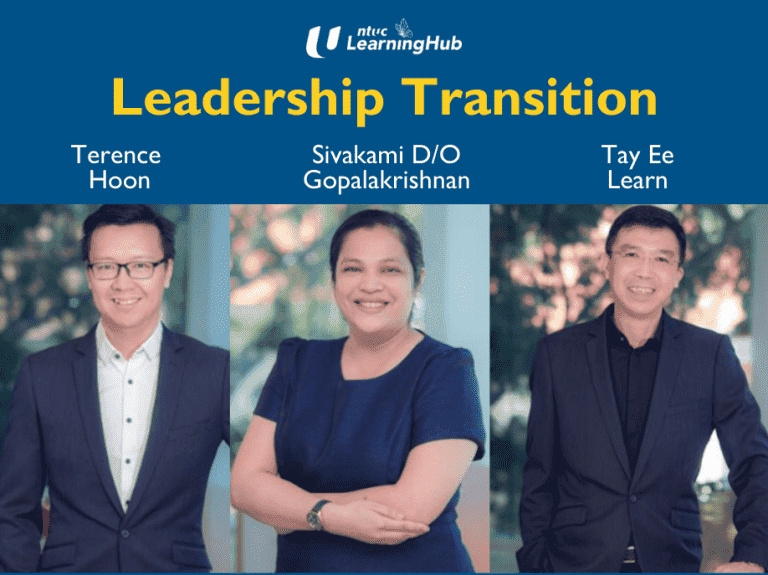
NTUC LearningHub (NTUC LHUB) today announced the formation of an interim Core Leadership Team, comprising its Chief Financial Officer Terence Hoon, Senior Director of Corporate Sales Sivakami Gopalakrishnan and Director of Technical Skills Product Division Tay Ee Learn, led by NTUC LHUB Chairman Eugene Wong. This appointment follows the unexpected passing of its CEO Kwek Kok Kwong on 14 November 2020. The interim team will ensure a smooth leadership transition and operations as we embark on the search for a new CEO. About NTUC LearningHub’s Core Leadership Team Eugene Wong, Chairman Eugene Wong is the Chairman of NTUC LearningHub. He is also the Founder and Managing Director of Sirius Venture Capital, a Singapore venture investment firm. He is also the Chairman of CrimsonLogic Pte Ltd and GeTS Global Pte Ltd, and is a Director on several SGX listed companies, serving as Vice Chairman of Japan Foods Holding Limited, Non- executive Director of Jason Marine Group Ltd and Independent Director of Alliance Healthcare Group Limited and APAC Realty Limited. Eugene is an alumni of NUS, Imperial College London and Harvard Business School. He is a Chartered Director (CDir), Chartered Financial Analyst (CFA) and Chartered Valuer and Appraiser (CVA). He is also a Fellow of the UK Institute of Directors (FIoD), Australian Institute of Company Directors (FAICD) and the Singapore Institute of Directors (SID). Terence Hoon, Chief Financial Officer Terence is responsible for the finance and operations of NTUC LHUB. His primary responsibilities are to manage the finance functions and to co-ordinate the back office operations support for training delivery. He has many years of experience in regional financial management across various industries including logistics, manufacturing and IT. He has also worked in China for four years with JDEdwards. In his most recent position, Terence served as a Financial Controller in Keppel Logistics, covering various Asian countries in areas of controllership, enterprise risk management, financial due diligence and Merger & Acquisitions. He was also on the Board of Directors for two of its subsidiaries, Transware Distribution and Keppel Logistics Malaysia. Sivakami Gopalakrishnan, Senior Director of Corporate Sales Sivakami drives Corporate Sales in NTUC LHUB by building relationships with corporate clients and strategic partners looking to transform their business through learning solutions. She began her career in NTUC LHUB since its incorporation as a Curriculum Manager before transitioning to sales. She has managed the various sales teams in NTUC LHUB and had the opportunity to work with the full spectrum of customers that LHUB served – individuals, unions, labour intermediaries and corporate organisations. Beyond sales, she has also headed a few product divisions in NTUC LHUB where she was responsible for the business strategy and operations of these divisions. Prior to joining LHUB, Sivakami spent three years in the NTUC Administration and Research Unit (ARU) Skills Development Department. She was involved in curriculum development and the running of the IT Training Centre. Tay Ee Learn, Director of Technical Skills Product Division Ee Learn heads the Technical Skills Product Division, one of the largest provider of Workplace Safety and Health training in Singapore. The division works with the regulators, unions and industry to provide a comprehensive range of learning services and solutions for the advanced manufacturing, built environmental and trade & connectivity clusters. Ee Learn started his career with the Ministry of Defence before moving on to the private sector. His industrial experiences, both locally and regionally, include operations, food production, supply chain management, safety, security and information technology. He had also served as a board member for several private organisations. Contact Rachel Ooi Rongrawee Brand & Communications Manager Email: Rachel.ooi@ntuclearninghub.com Mobile: +65 8100 2779 See Wee Heng Head of Marketing Email: weeheng.see@ntuclearninghub.com Mobile: +65 9650 1601 "

COVID-19 Is Changing The Way We Learn – Here is How to Keep Up
In these unpredictable times, people around the world have to adjust to new ways of living, working, and studying. COVID-19 is impacting the very way we learn, so it is up to us to stay resilient in the face of change. The future is digital, they said. Little did we know the future would come so soon, as the world transitions towards operating online in a bid to stay afloat. While we grapple with this new reality, where face-to-face gatherings and in-class education are put on hold, digital skills and online capabilities become ever so important."
Three Steps NTUC LHUB Has Taken To Adapt And Grow During The Pandemic #HRtogether
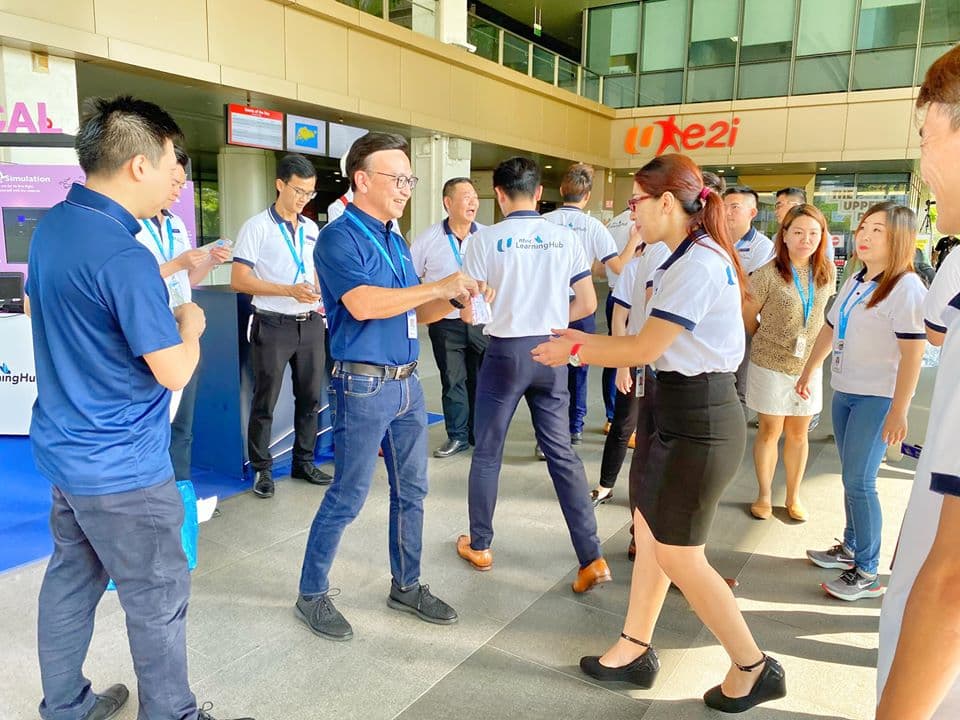
Original article published on Chartered Institute of Personnel and Development (CIPD) website COVID-19 is an unprecedented event and warrants an unprecedented response. At NTUC LearningHub (LHUB), that mindset has driven our actions as an organisation over the last two months. When COVID-19 reared its ugly head in Singapore, one of the first things we did as a team was to acknowledge it was a crisis and we put ourselves on a “war footing”. This shifting of gear in our mind was important, as it emphasised that we cannot treat it as business as usual. There were three main thrusts to our approach: 1. Maintaining A Sense Of Mission During the COVID-19 period, LHUB played an important role in providing training under the Enhanced Training Support Package (ETSP). Our mission is to deliver training to the sectors which have been severely affected by COVID-19, such as Tourism, Aviation, Retail, Food Services, Arts and Land Transport, as well as self-employed workers. As the saying goes, the show must go on and staying true to our mission keeps us going because we know our efforts will pay off and benefit many. 2. Embracing Agile Ways Of Working One immediate change that we effected was to schedule daily stand-up meetings to take stock of what policies have changed and brainstormed our next course of actions. We threw away our old SOPs and moved away from email discussions to this daily stand-up meeting, which built quick and robust solutions through collaboration and collective wisdom. Through this platform we came up with concrete action plans, took stock of results from yesterday’s efforts and cleared any roadblocks as a team. Another change was to put together various multi-disciplinary taskforces to address new solutions. In doing this, we tore down organisational walls and barriers, hastened collaboration and empowered rapid execution. We had one task force focused on ‘defence’ – ensuring that all safety issues were implemented and that our processes kept up with the evolving health risks. Another taskforce focused on ‘midfield’ – revamping our courses and products to be digitally ready. A final taskforce focused on ‘frontline’ – ensuring that we were ready to support the national agenda and outreach to help the affected companies and workers. If you are familiar with the agile methodology in IT development, we essentially adopted the agile mindset to handle the COVID-19 crisis. In framing solutions, we asked ourselves what resources and time we have and within those constraints, we decided rapidly what we can deliver and then rigorously tracked that delivery. Looking back, this approach enabled us to achieve results beyond what we could imagine, and allowed us to almost seamlessly transform to support our broader mission. We pivoted from a purely face-to-face training organisation to one that is nearly 100% virtual classroom delivery. We retrained hundreds of trainers to train and proctor in a virtual environment. We launched a community initiative within one week to offer 100 free online courses nationally, and within a month, this product had attracted 65,000 sign-ups and 10 million minutes of learning were completed. To reach our customers, we launched Virtual Consultancy and Virtual Roadshows. 3. Foster A Sense Of Caring Our hardworking team stands behind the rapid transformation, and we know the anxieties created by COVID-19 and the challenges of working from home. Lives have been turned upside down as people have been separated from family, friends, and colleagues. As leaders, empathy was critical as we helped each other through. As an appreciation to staff, we also launched an LHUB Cares program, providing everyone a $100 grocery shopping voucher, with further support for staff who’s family had been severely affected. It is a small gesture but an important one to make sure we stay together as one as we enter the next phase of our COVID-19 battle together. To view the original CIPD article, please click here. "